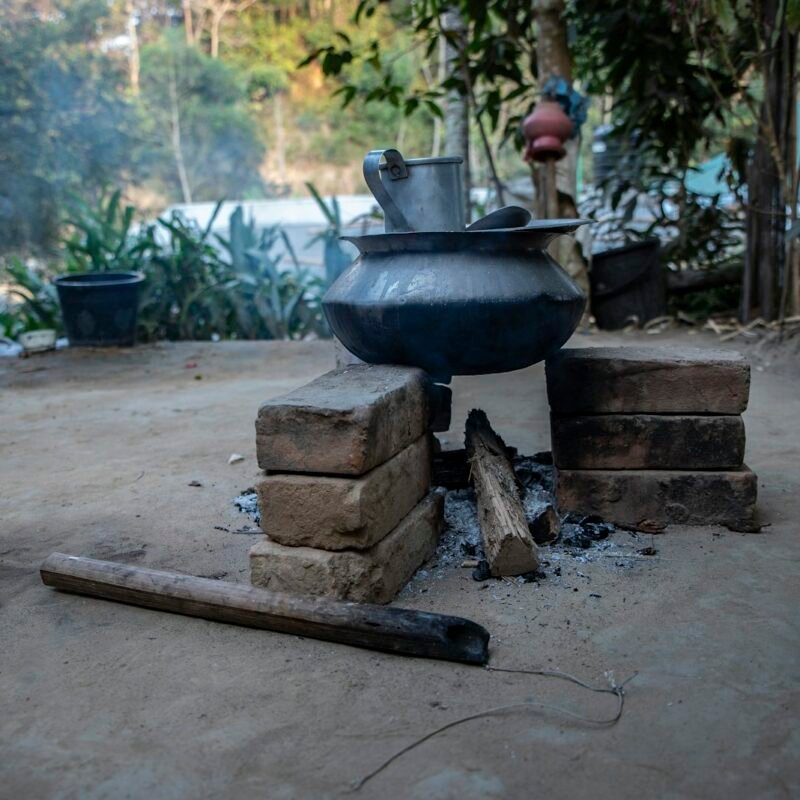
Walk into any traditional Tamil Nadu kitchen and you’ll likely find a row of clay pots, blackened with years of wood smoke. It’s not nostalgia that keeps them there — it’s flavour.
Porous clay, slow heat
Unlike steel or non-stick cookware, clay is porous. It breathes as it cooks, allowing steam to escape gradually rather than trapping it. That slower moisture loss concentrates flavour instead of diluting it.
Alkaline minerals, natural seasoning
Clay is naturally alkaline, which helps balance the acidity of tamarind- and tomato-based gravies — part of why a kuzhambu cooked in clay tastes rounder than the same recipe in steel.
We still do it the slow way
A handful of our village-style dishes are still finished in clay pots over a wood-fired stove. It takes longer. It also tastes like someone’s grandmother made it — because, in spirit, she did.